
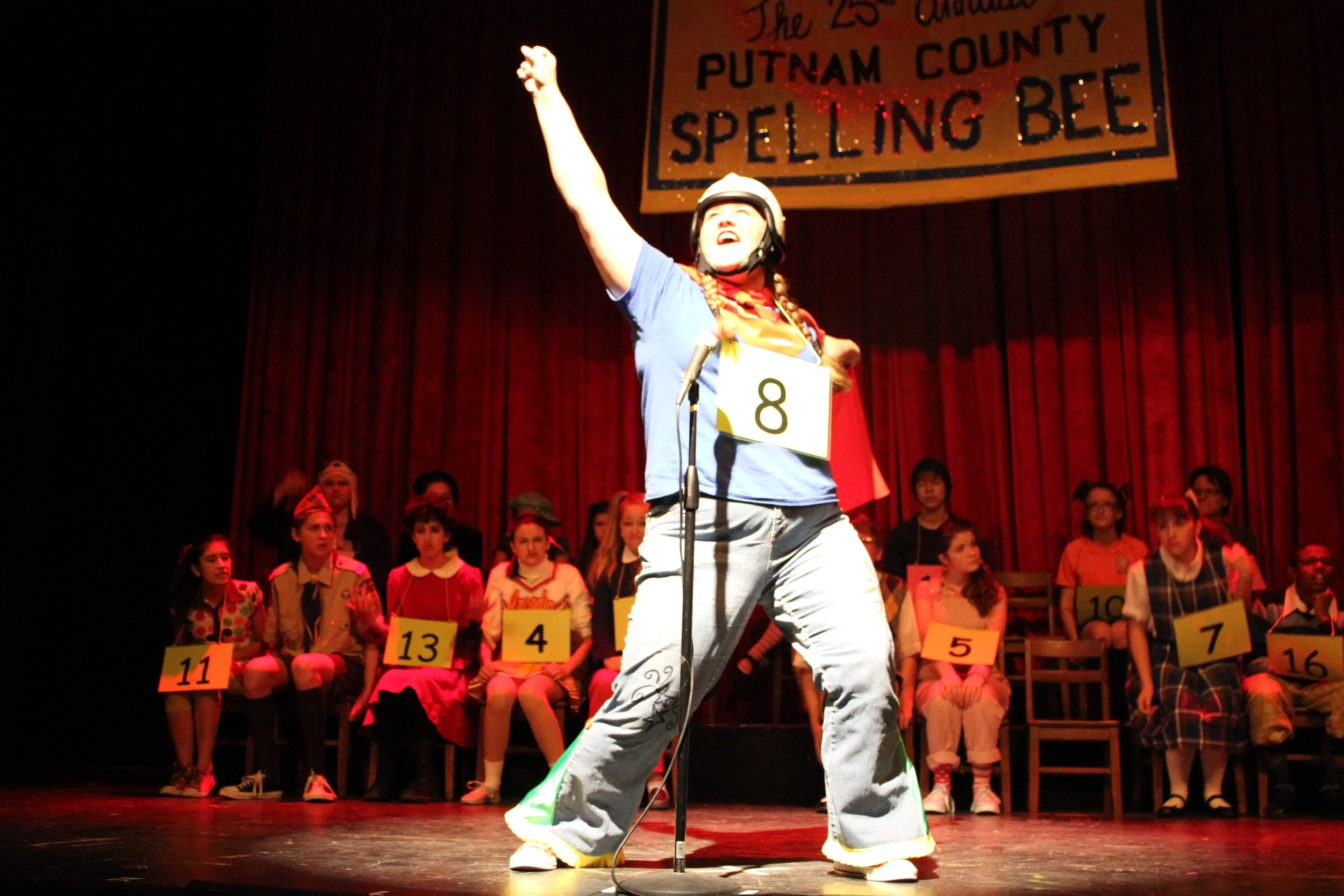
At Theatre 360, productions are an extension of our training, not a shortcut around it.
FALL PRODUCTION 2026!
Tickets on sale now!
Performances:
December 11th, 12th, 13th
Escape to a world of pure imagination with
ROALD DAHL’S Charlie and The Chocolate Factory – The Musical.
Based on the iconic story, this spectacular stage show follows the hit West End and Broadway revival productions to combine the memorable songs from the original 1970’s motion picture (‘The Candy Man’ and ‘Pure Imagination’) with all new numbers from the multi award-winning songwriters of Hairspray.
When Charlie Bucket finds one of the five golden tickets to the Wonka Chocolate Factory, Charlie and the other winners can’t wait to feast on the sweets of their dreams. But beyond the gates, they discover more than just remarkable edible delights. As they embark on an extraordinary journey through Willy Wonka’s marvelous mind, they soon learn that nobody leaves the same way that they arrived…
QUESTIONS?
We’re happy to help you determine the best path for your child.
Email: info@theatre360.org
Learn more about classes: Explore Classes
Audition Tips & Advice
Where to Start?
Know the show you’re auditioning for by doing research—Can you watch it? Listen to it? Read it? Then do it! In all cases the audition requirements pertain to the needs of the show.
Most auditions have specific requirements. Be sure to follow these. For instance, if you’re asked to perform 32 bars of a classic musical theatre song, don’t sing 16 bars of a contemporary musical theatre song. Or if asked to prepare a short humorous monologue, don’t prepare a tragedy.
Practice. Repeat. And repeat. And repeat. And repeat…!
Theatre 360 Auditions
At T360 when casting young performers we take into account the student’s level of enthusiasm, commitment, and discipline. All of these components—in addition to being easy to work with—are vital to putting on a production.
In addition:
Performers must schedule an audition time
Have their required materials memorized and prepared
Come dressed like you want the job (but no costumes!)
Have fun and knock it out of the park!
Also make sure you’ve checked the rehearsal and performance schedule so you know if your life has time for the production.
After the Audition
If you’ve prepared and presented yourself and your material to the best of your ability, then congratulations! Be proud of yourself. Resist second-guessing yourself and thinking, “Oooh, I should have…” Casting is now in the hands of the production staff. It will help you to know that each person sitting at the casting table has been where you were many times and they understand that what you’ve just done is extremely difficult. We are your staunchest champions and are proud of you for being bold and auditioning.
Being Cast
Each and every role—regardless of size—is crucial to the show, therefore every actor cast is vitally important. That said, an actor is expected to treat the role as important as it is. No student is indispensable and everyone must support each other and work together to ensure a performance of which everyone can be proud. Let’s work hard, create, and have fun!
Tips for Musicals
Picking a Song
What to sing?
Sing something you love.
Sing something you know you sound good singing.
Sing something you know inside and out.
Sing something that shows you off!
When picking a great audition song a few things to remember:
Find a song that shows off your vocal range. If you can sing from below middle C to above high F show it off.
Always pick the most interesting part of the song. You have 16 to 32 bars to show off. In most cases this is the middle to end of the song.
If you are interested in a certain role find a song that reflects the personality of that characters role.
Don’t pick overdone songs. It is just as easy to search the internet to find an interesting and different song than an overdone musical theatre song. One website to look at is https://auditioningforcollege.com/2011/06/13/do-not-lists/
You can also search with the subject “overdone children’s audition songs”/”overdone musical theatre songs” etc.
Preparing the Song
What is a 16 or 32 bar cut?
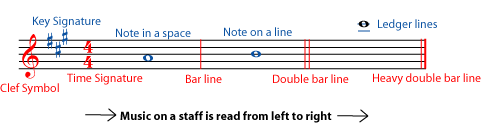
If you look on a piece of sheet music (any standard sheet music), you will notice that the music staff (the lines and spaces where the notes are written in) are broken up by vertical lines–bars–according to the time signature (how many beats each note gets per measure).The bit between two vertical lines would be one bar of music. Count these out to make 16 bars or 32 bars
Do not have a long intro – we want to hear your voice more than the piano. Have a clean intro to get you into the song, hear your starting note and then off you go!
What should my music look like?
Clean, easy to read. Where you start and end should be clearly marked.
Put it in a binder and 3 hole punch so the music is easy to read and stand up.
Pre-bound music books are sometimes hard to stay open for the accompanist. Xerox your music and put into a binder or tape your music front and back with clear tape so easy for accompanist to read!
What is a ballad vs an uptempo?
A ballad is a slow song. Your choice should show off your vocal transitions, breathing, phrasing, and range.
An uptempo is a song that moves – that you want to tap your toes too. Try and not pick a moderate tempo song. We are looking for songs that reflect the show, and sell you.
A few more things
Understand what you are singing about. You will sound better if you act your song.
Have an objective. You want what at the end of the song? You discover what through singing the song?
Have a story that makes sense with your lyrics.
Who are you singing to?
What are you singing about?
Be kind and courteous to everyone: the people signing you up, the accompanist, the audition monitors.
Know that we cannot wait to work with you!
Come in prepared. Looking good. With a great attitude.
Know that the size of your part does not constitute how much you will be in the production. Don’t have an ego about “I’m not the lead so I’m not going to waste my time.” Every production you are in, the better you get, no matter the part, IF you apply yourself. There are tons of people working on Broadway who were in the ensemble in their youth theatre and understood that it was about the work and not just the glory.
Remember this is not a sprint but a marathon!
FAQs
-
We are Theatre 360, an award-winning children’s theatre company celebrating 25 successful years in Pasadena. T360 productions have won five Pasadena Weekly “Best Production” awards and the Pasadena Arts Council’s Gold Crown Award for “Excellence in the Performance Arts.” Over the years T360 productions students have entertained more than 22,000 happy audience members!
-
Students audition and those who are cast in the performance are called to rehearsal twice per week.
-
Productions are inclusive of beginners and challenging for advanced students, so all students who are cast are stretched and supported.
-
Productions are inclusive of beginners and challenging for advanced students, so all students who are cast are stretched and supported.
-
Auditions are free. Your student must be enrolled in a T360 class or camp to audition. If your student is cast, there is a production fee to cover the costs of putting on the show.
-
To audition, students must be enrolled in one of our classes or camps. Please check the audition description for age requirements. Most auditions have specific requirements. Be sure to follow these. For instance, if you’re asked to perform 32 bars of a classic musical theatre song, don’t sing 16 bars of a contemporary musical theatre song. Or if asked to prepare a short humorous monologue, don’t prepare a tragedy.
-
Varies by production. Venue information will be available prior to the performance.
-
Keep checking our website for audition information. Or follow us on Instagram. You can also sign up for emails!